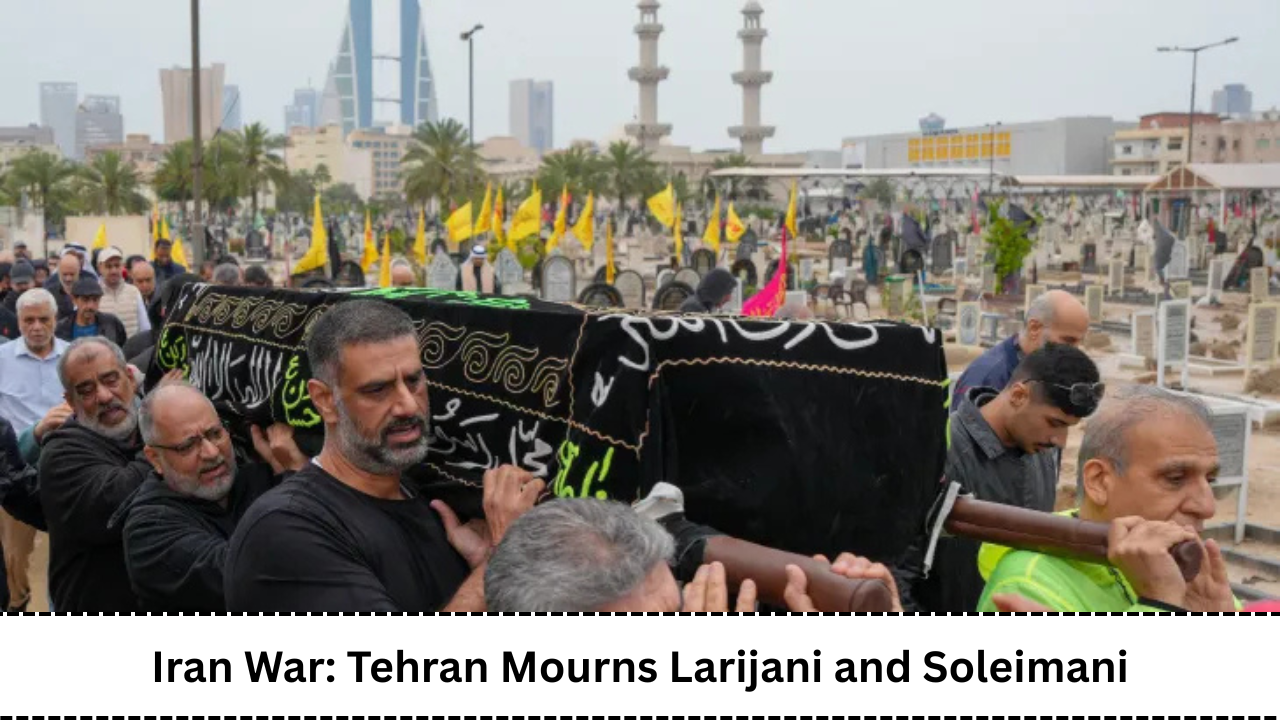
Iran War: Tehran Mourns Larijani and Soleimani
The ongoing Iran War – Israel war intensified as Tehran mourned the deaths of two senior officials, Ali Larijani and Gholamreza Soleimani, following Israeli airstrikes. At the same time, Iran launched retaliatory missile attacks toward Israel, killing two people and further escalating the regional conflict.
The latest developments have deepened fears of a wider Middle East war and raised global concern over the rapidly deteriorating security situation.
Israeli Strikes Kill Top Iranian Officials
According to Israeli officials, airstrikes targeted senior Iranian leadership in Tehran, reportedly killing Ali Larijani, a powerful figure in Iran’s national security structure, along with Basij militia commander Gholamreza Soleimani.
Larijani was considered one of the most influential figures in Iran’s political and military strategy and had played a key role in national security decisions and nuclear diplomacy.
His death is viewed as a major blow to Iran’s leadership, coming shortly after other high-profile casualties in the ongoing war.
Tehran Holds Mourning Ceremonies
In Tehran, large mourning ceremonies and tributes have taken place for the fallen officials. Government leaders and military commanders described them as “martyrs of the nation.”
Crowds gathered in public spaces, carrying portraits and chanting slogans condemning Israel’s actions. The funerals are expected to become symbolic events that could strengthen public support for retaliation.
Iran Retaliates With Missile Attacks
Following the strikes, Iran launched a barrage of missiles toward Israel. Some missiles reached Israeli territory despite air defense systems intercepting many of them.
Reports indicate that two people were killed in Israel during the retaliatory attacks.
Several Middle Eastern countries, including Bahrain, Qatar, Saudi Arabia, and the UAE, also reported intercepting drones or missiles during the escalation.
Growing Risk of a Wider Regional War
The deaths of Larijani and Soleimani highlight the intensity of the ongoing conflict. Analysts say the targeting of top leadership suggests Israel is pursuing a strategy aimed at weakening Iran’s command structure.
Meanwhile, Iran’s missile responses indicate it is willing to escalate militarily rather than step back.
The conflict has already caused thousands of casualties and widespread destruction, raising fears that it could spread further across the Middle East.
Global Reactions and Diplomatic Concerns
World leaders and international organizations have expressed concern over the rapidly escalating war.
Diplomats warn that continued strikes and retaliation could destabilize the region and disrupt global energy supplies, especially around critical shipping routes like the Strait of Hormuz.
Several countries are urging both sides to pursue diplomacy and avoid actions that could trigger a larger regional conflict.
Conclusion
The deaths of Ali Larijani and Gholamreza Soleimani mark another major turning point in the Iran-Israel war. While Tehran mourns its fallen leaders, the missile attacks that killed two people in Israel show that the cycle of retaliation is far from over.
As tensions continue to rise, the world watches closely, hoping that diplomacy can prevent the conflict from expanding into a full-scale regional war.



Post Comment