


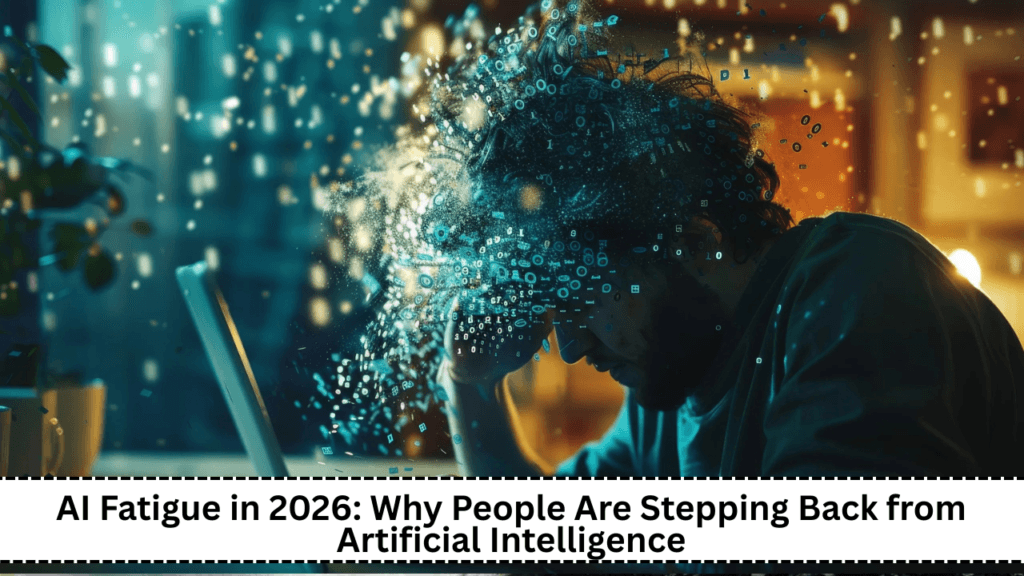
Artificial Intelligence was once exciting, even magical. But in 2026, a new trend is quietly taking over conversations online and offline — AI Fatigue.
People aren’t rejecting AI outright, but they are tired of its constant presence in work, creativity, education, and daily life.
From auto-written emails to AI-generated content everywhere, the overload is real.
What Is AI Fatigue?
AI fatigue is the mental and emotional exhaustion caused by continuous interaction with artificial intelligence systems.
It shows up as:
- Feeling overwhelmed by too many AI tools
- Distrust in AI-generated content
- Loss of motivation to create or think independently
- Constant pressure to “keep up” with automation
Simply put, people are asking:
Where do humans fit anymore?
Why AI Fatigue Is Trending in 2026
1. AI Is Everywhere Now
AI is no longer optional. It’s embedded in:
- Offices and remote work
- Education platforms
- Content creation
- Customer service
- Social media
When everything is automated, nothing feels special.


2. Creativity Is Feeling Replaced, Not Assisted
Writers, designers, artists, and musicians are increasingly vocal about burnout. Instead of helping creativity, AI often creates pressure to:
- Produce faster
- Compete with machines
- Devalue original effort
This leads to emotional exhaustion, not efficiency.
3. Trust Issues with AI Content
In 2026, people question what is:
- Real
- Edited
- Generated
- Manipulated
When trust erodes, fatigue follows.
How People Are Responding to AI Fatigue
Interestingly, the response is not rebellion — it’s balance.
People are:
- Choosing human-made content
- Slowing down automation in personal workflows
- Valuing authenticity over perfection
- Taking breaks from AI-heavy platforms
“Human touch” is becoming a premium again.
AI Fatigue at Workplaces
Companies are noticing:
- Reduced enthusiasm for new AI tools
- Employees overwhelmed by constant updates
- Productivity dropping due to tool overload
The smartest organizations in 2026 are doing one thing right:
They are simplifying, not adding more AI.
Is AI Fatigue a Threat to Artificial Intelligence?
No.
But it is a warning sign.
AI will continue to grow, but its future depends on:
- Ethical use
- Clear boundaries
- Human-centered design
The next phase of AI isn’t about power — it’s about restraint.
The Shift from “AI Everything” to “AI When Needed”
A noticeable trend in 2026:
- Fewer flashy AI features
- More intentional usage
- Emphasis on decision-making, not replacement
People don’t want AI to think for them.
They want it to think with them.
Why This Trend Matters
AI fatigue is not anti-technology.
It’s pro-human.
It reminds us that:
- Speed isn’t everything
- Automation has limits
- Creativity needs space
- Humans need meaning, not just efficiency
Final Thoughts
AI fatigue in 2026 is a pause — not an ending.
A moment where society steps back and asks a critical question:
Just because we can automate everything… should we?
The future of AI belongs to those who learn when to use it —
and when to step away.