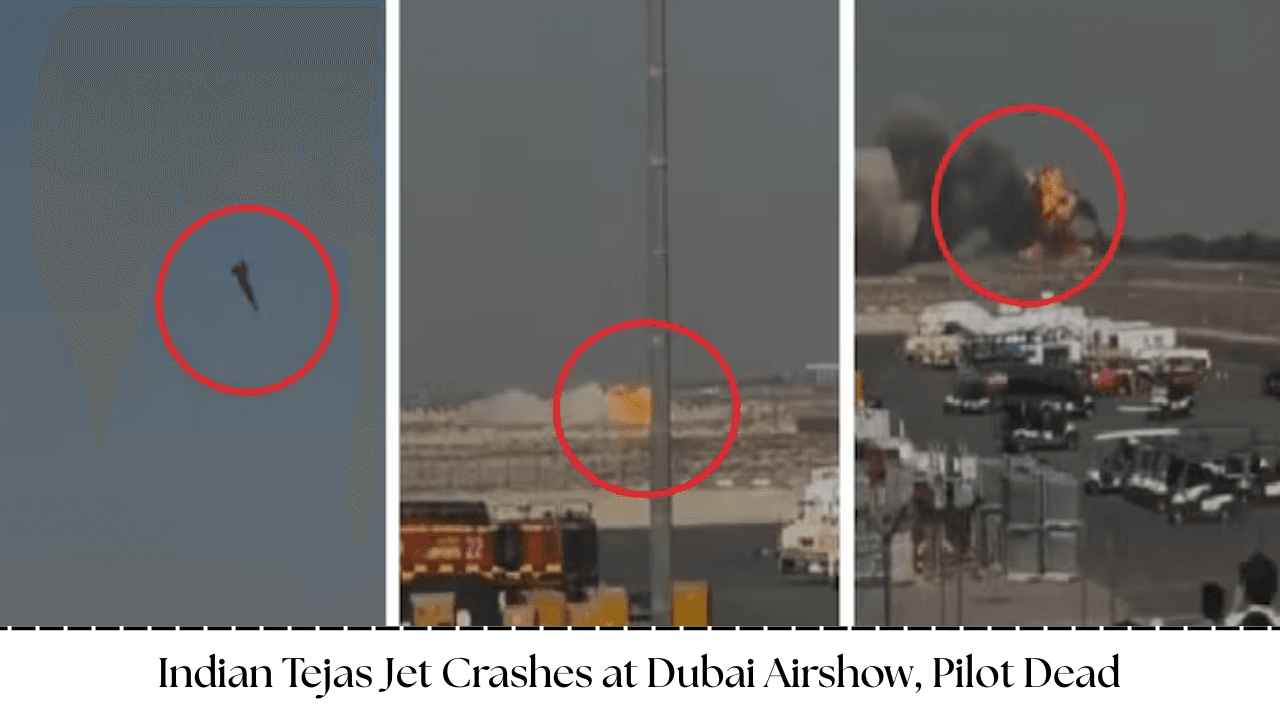
Indian Tejas Jet Crashes at Dubai Airshow, Pilot Dead
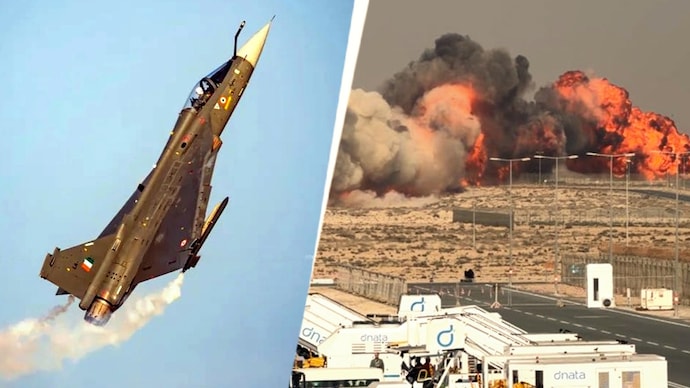
On 21 November 2025, the international aviation community witnessed a devastating moment when India’s indigenous fighter jet, the HAL Tejas, crashed during a live aerobatic performance at the Dubai Airshow. Within seconds of losing control, the aircraft struck the ground and burst into an enormous fireball, instantly drawing gasps and screams from the crowd.
The explosion sent thick black smoke rising into the sky — a moment described by witnesses as unreal, silent, and then suddenly violent.
What Happened During the Display?
The Tejas fighter jet was executing a high-precision manoeuvre — part of a routine meant to showcase speed, agility, and advanced flight control. Everything appeared smooth until the jet attempted a rapid descending turn.
Within moments, the aircraft lost altitude faster than expected. Spectators later recalled that the jet seemed to “drop out of the sky” with no time to recover.
The aircraft hit the ground, ignited immediately, and turned into a massive blazing impact.
Pilot Identified and Remembered
The crash resulted in the tragic death of the pilot:
🕊 Wing Commander Namansh Syal of the Indian Air Force.
He was known for precision flying, skill, and experience — and was representing India in a high-stakes international arena.
Tributes have poured in from fellow pilots, aviation experts, defence officials, and citizens across India and abroad.
Why This Incident Matters
This crash resonates far beyond the runway. Its implications touch several areas:
1️⃣ Human Loss
Behind the machine was a trained officer who dedicated his life to serving his country in the skies.
2️⃣ National Defence Confidence
The Tejas programme represents India’s ambition to design and deploy home-grown fighter jets. A crash at a major global event becomes a moment of emotional and strategic setback.
3️⃣ Risks of Aerobatic Demonstrations
Airshows are thrilling, but they demand extreme precision at low altitude — leaving pilots with very little margin for error.
4️⃣ International Perception
India has been actively promoting Tejas for export deals. Such an incident may influence buyer confidence and global evaluation.
What Could Have Caused the Crash?
While the official investigation will determine the exact reason, early indicators suggest that the jet may have lost stability during a negative-G manoeuvre — a move that temporarily reduces gravitational load on the aircraft.
At low altitude, even milliseconds of miscalculation or mechanical delay can prevent recovery.
What Happens Next?
A formal inquiry will now:
- Review flight telemetry and onboard systems
- Examine the aircraft’s maintenance and mechanical history
- Analyse pilot actions and environmental factors
- Reassess Tejas flight demonstration protocols
India’s aerospace and defence authorities are expected to strengthen safety frameworks before the aircraft participates in future airshows or export trials.
A Moment of Reflection
The Tejas crash at Dubai Airshow 2025 is a sobering reminder that the world of aviation — especially military aviation — exists at the edge of physics and courage.
Aircraft are engineered with precision. Pilots train with discipline. Yet, in extreme, high-risk performances, even the most advanced machine can fail — and the cost is often paid with a human life.
Final Thoughts
India will grieve the loss of a brave pilot, but it will also learn, adapt, and continue its journey toward becoming a significant aviation and defence innovator.
Wing Commander Nanmash Syal’s dedication will be remembered — not as a failure, but as part of a nation’s pursuit of progress.
🕊 Rest in peace, Pilot.
Your courage remains airborne — forever.




Post Comment