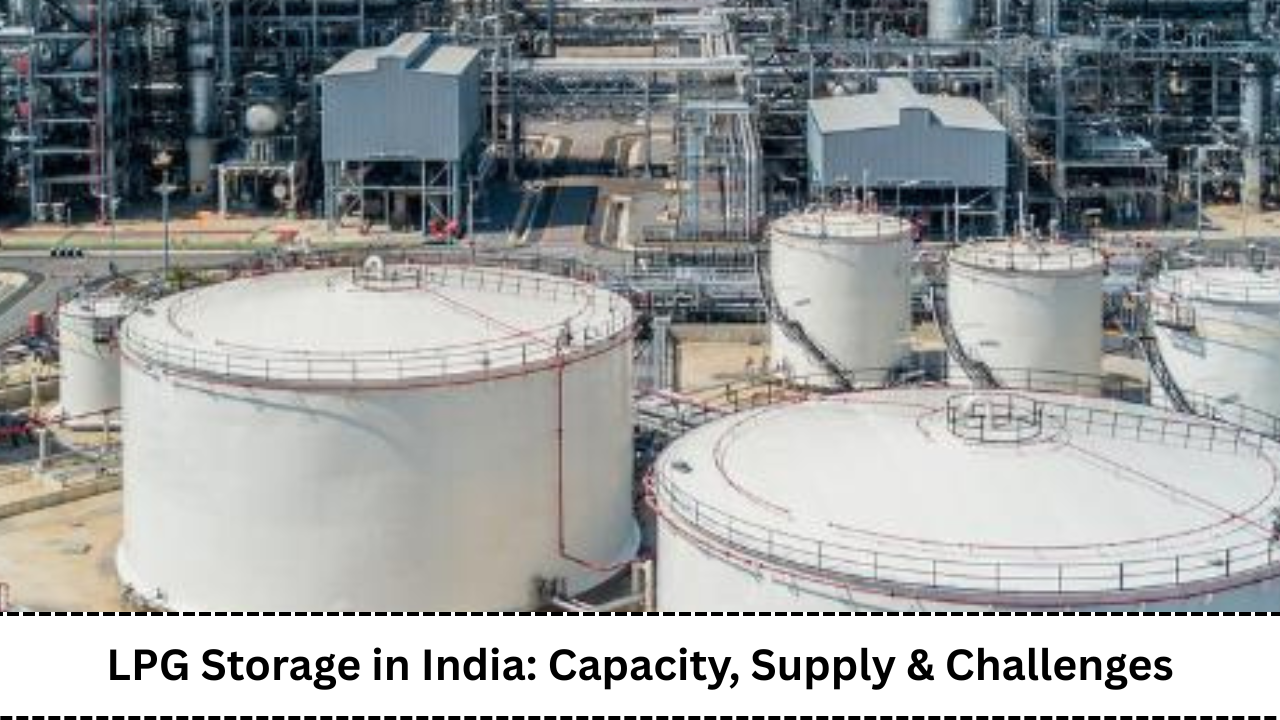
LPG Storage in India: Capacity, Supply & Challenges
Liquefied Petroleum Gas (LPG) plays a crucial role in India’s energy system. It is widely used for cooking, industrial heating, and commercial purposes. As demand for LPG continues to rise, LPG storage in India has become a key component of the country’s energy infrastructure.
India has built an extensive network of storage terminals, bottling plants, and distribution systems to ensure that LPG reaches millions of households across the country.
🔋 What is LPG Storage?

6
LPG storage refers to the facilities used to store liquefied petroleum gas before it is distributed to consumers.
LPG is stored in:
- Large pressurized storage tanks
- Spherical tanks (LPG spheres)
- Underground storage caverns
- Cylinder storage depots
These facilities help maintain a stable supply even during fluctuations in production or imports.
📊 LPG Storage Capacity in India
India is one of the largest consumers of LPG in the world. The country’s storage capacity has expanded significantly to support the rising demand.
Key features of LPG storage in India:
- Hundreds of LPG bottling plants across the country
- Large storage terminals located near ports and refineries
- Strategic reserves to handle supply disruptions
- Growing use of underground storage facilities
These systems allow India to store LPG safely before it is transported to different regions.
🚢 LPG Supply Chain in India
The LPG supply chain in India involves several stages.
- Production – LPG is produced in oil refineries and natural gas processing plants.
- Imports – India imports a large portion of its LPG to meet domestic demand.
- Storage – LPG is stored at terminals and storage facilities.
- Transportation – It is transported by pipelines, tankers, and rail wagons.
- Distribution – Bottling plants fill LPG cylinders which are delivered to households.
This integrated system ensures a reliable supply of cooking gas across the country.
🏭 Major Companies Managing LPG Storage
Several major energy companies manage LPG storage and distribution in India.
These include:
- Indian Oil Corporation
- Bharat Petroleum Corporation Limited
- Hindustan Petroleum Corporation Limited
These companies operate large storage terminals and bottling plants nationwide.
📈 Growing Demand for LPG
LPG demand in India has grown rapidly due to government initiatives and population growth.
Important factors driving demand:
- Expansion of clean cooking programs
- Increased urbanization
- Rising household consumption
- Industrial and commercial use
Government schemes have also helped bring LPG connections to rural areas.
⚠️ Challenges in LPG Storage
Despite the expansion of infrastructure, several challenges remain:
- Increasing import dependence
- Need for more storage capacity near ports
- Safety requirements for storage facilities
- High transportation costs to remote areas
Addressing these challenges is essential to ensure uninterrupted LPG supply.
🏆 Future of LPG Storage in India
India continues to invest in expanding its LPG infrastructure. New storage terminals, underground caverns, and improved logistics systems are being developed.
These improvements aim to:
- Strengthen energy security
- Reduce supply disruptions
- Support the growing demand for clean cooking fuel
📌 Conclusion
LPG storage in India is a critical part of the country’s energy system. With millions of households relying on LPG for cooking, maintaining strong storage and distribution infrastructure is essential.
As demand continues to rise, India is expected to expand its LPG storage capacity further to ensure reliable and safe energy supply for the future.




Post Comment