


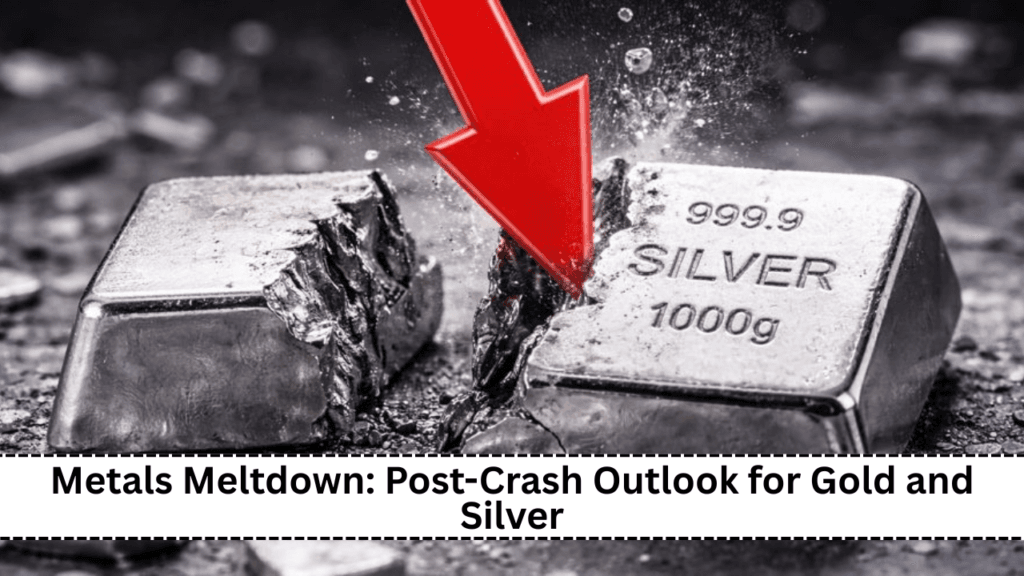
Precious metals have witnessed a sudden meltdown, with both gold and silver coming under heavy selling pressure. After months of strong performance, prices corrected sharply, catching many investors off guard. The sell-off reflects shifting global cues rather than a collapse in fundamentals.
Now, the big question is clear: what comes next for gold and silver?
Why Did Gold and Silver Crash?
Several factors triggered the correction:
- Stronger global currencies reduced short-term demand
- Profit booking after a prolonged rally
- Rising bond yields increased opportunity costs
- Improved risk appetite in select equity markets
Together, these factors pushed precious metals into a temporary downturn.
Gold After the Crash: Stability Over Speed
Gold’s decline has been relatively controlled compared to other assets. Historically, gold tends to correct sharply but stabilise quickly.
What the Roadmap Looks Like
- Short-term consolidation likely
- Strong support at lower levels
- Demand from central banks remains intact
- Long-term hedge appeal unchanged
Gold may not rebound immediately, but it continues to offer stability in uncertain conditions.


Silver Faces Higher Volatility
Silver, unlike gold, carries both precious metal and industrial metal characteristics. As a result, it tends to react more sharply during market swings.
Post-Crash Outlook for Silver
- Higher volatility expected in the near term
- Recovery linked to industrial demand
- Global growth trends will play a key role
- Suitable mainly for risk-tolerant investors
Silver’s roadmap appears bumpier, but potential upside remains if industrial activity improves.
Investor Strategy After the Metals Meltdown
The post-crash phase calls for discipline, not panic.
What Investors Can Consider
- Avoid chasing quick rebounds
- Accumulate gradually instead of lump-sum buying
- Maintain gold as a defensive allocation
- Use silver selectively for tactical exposure
A balanced approach remains crucial.
Short-Term vs Long-Term Perspective
In the short term, metals may remain range-bound as markets digest new information. However, from a long-term lens:
- Gold continues to protect against inflation and uncertainty
- Silver benefits from both investment and industrial cycles
Corrections often reset overheated markets and create healthier price structures.
Key Risks to Watch
- Sudden shifts in interest rate expectations
- Currency volatility
- Changes in global growth outlook
- Geopolitical developments
These factors will influence how quickly metals regain momentum.
Final Takeaway
The metals meltdown has shaken confidence, but it has not broken the long-term case for gold and silver. Gold appears positioned for stability, while silver offers higher risk with potential reward.
For investors, the post-crash roadmap is clear: stay patient, stay diversified, and let fundamentals—not fear—guide decisions.